I Made Another Garden
Arthur William Edgar O'Shaughnessy
I made another garden, yea,
For my new love;
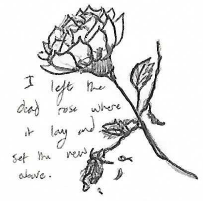
I left the dead rose where it lay,
And set the new above.
Why did the summer not begin?
Why did my heart not haste?
My old love came and walked therein,
And laid the garden waste.
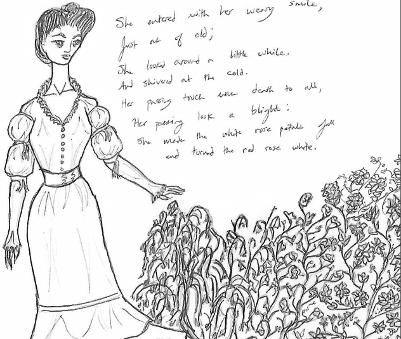
She entered with her weary smile,
Just as of old;
She looked around a little while,
And shivered at the cold.
Her passing touch was death to all,
Her passing look a blight:
She made the white rose-petals fall,
And turned the red rose white.
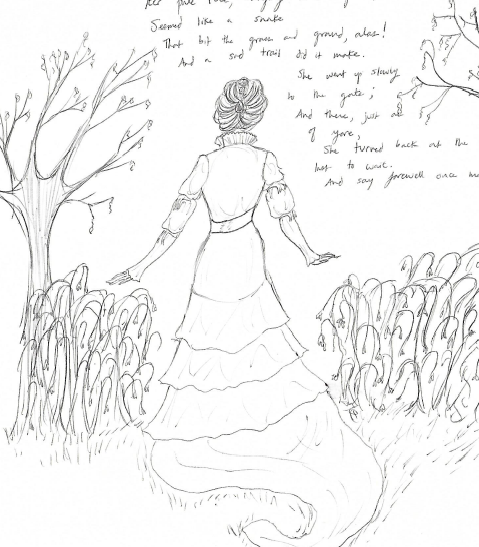
Her pale robe, clinging to the grass,
Seemed like a snake
That bit the grass and ground, alas!
And a sad trail did make.
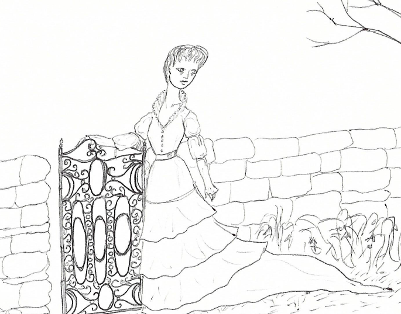
She went up slowly to the gate;
And there, just as of yore,
She turned back at the last to wait,
And say farewell once more.
I came across this poem while rereading Audrey Niffenegger's novel, "Her Fearful Symmetry". At first I thought she'd fabricated the poem since it fit so well will the theme and plot of her story; however, on very rudimentary investigation, I discovered it was a real poem, written over 120 years before Niffenegger conceived the idea for her book. My assumption, although unproven, it that she must have been inspired by this work and so fleshed it out into a full-length manuscript.
O'Shaughnessy's poem is an interesting meditation on the idea of the revenant (a ghost of a loved one or family member who remains after death to complete unfinished business or seek revenge). The speaker has lost his love and wants to move on with his life, and in an attempt to do this, he plants another garden for his new love. He waits for the flowers-- and love-- to grow but neither does. When it seems as if his new garden is finally blossoming as he sets his new rose above the old, his specter of his old love enters through the gate.
She is not a ransacking or violent spirit, she does not fly into the garden to tear the roses from their roots and destroy the cherubic statues; instead she seems amused by this attempt to find happiness and peace in her absence. She feels the chill of her lover's neglect and cannot support such abandonment. With a bemused smile upon her lips she wanders from bed to bed, turning the petals to rot and salting the ground. The narrator notes that the train of her dress coils and unfurls like a serpent upon the grass.
His old love is, indeed, serpentine, poisoning the garden with the venom of her memory, slithering from wall to wall, causing festering atrophy and death. The narrator seems to no longer be in love with this woman. He begrudges her the access to his garden and yet he can do nothing to stop her entering and laying waste to his attempts at regrowth.
She haunts him but, even more cruelly, she does not haunt him constantly. The poem suggests that she only makes appearances when he is attempting to move forward and continue with his life, specifically his romantic life. She makes him live in the constant reminder of her demise and will allow him no attempt at relief. And once she has devastated her lover, she leaves as peacefully and coldly as she entered.